
By Felisha Ali, OD
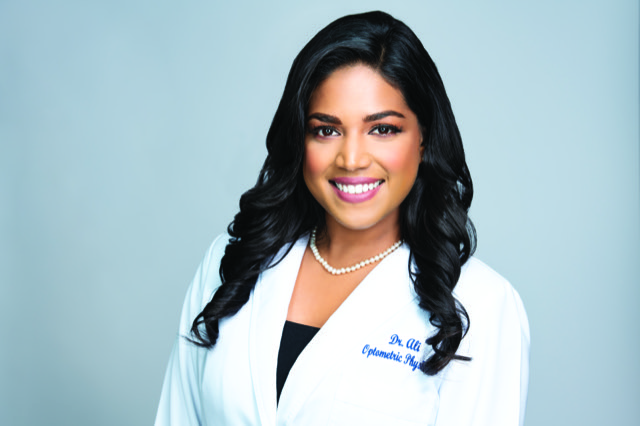
As an optometrist, I’ve used cryopreserved amniotic membranes (CAM) in the treatment of ocular surface disease, dry eye and epithelial defects across countless cases, and each time I’ve marveled at their ability to provide lasting healing to my patients. When I became pregnant last year, I knew that instead of having my placenta and umbilical cord thrown out as medical refuse, I could donate it to help provide critical healing to patients and support broader access to these life-changing therapies. Following my natural childbirth earlier this year, that’s exactly what I did.
MY JOURNEY THROUGH THE DONATION PROCESS
Despite my familiarity with using CAM therapy in my practice, I initially assumed that choosing a natural birth would make me ineligible to donate. Traditionally, birth tissue donations for therapeutic use were only accepted from planned C-section deliveries, as the scheduled timing and controlled sterility of the procedure simplified the logistics of tissue collection.
However, Sharing Miracles®, a program established by BioTissue® to support tissue donation, expanded its protocol in March 2024 to include natural births, allowing for many more mothers, including myself, to participate.1 Despite this shift, many people, including fellow physicians, remain unaware that birth tissue donation is possible after a natural birth—I even had to inform my own OB/GYN about this option! It’s also important to note that the decision to donate can be made at any time during the pregnancy; in some cases, even on the day of delivery.2
The donation process itself proved remarkably straightforward and non-intrusive. It began with a simple phone interview, where I completed a medical history questionnaire and provided informed consent to release my medical records, collected a specimen of blood for testing and acquired my birth tissue. After this, the Sharing Miracles® team coordinated everything directly with the medical staff behind the scenes. After I gave birth and both the baby and I were determined to be safe, a donation specialist from Sharing Miracles collected the placenta, and that was that; it wasn’t a bother or a nuisance in any way, and all-in-all I’d say it was a very easy experience.
WHY CAM: THE SCIENCE BEHIND CRYOPRESERVED VS. DEHYDRATED AMNIOTIC MEMBRANES
I chose to donate my placenta to be made into CAM specifically to maximize the therapeutic benefits it could provide to patients. Unlike dehydrated membranes, CAMs retain a unique molecular complex called heavy chain-hyaluronic acid/pentraxin 3 (HC-HA/PTX3), which drives much of the therapy’s healing power by reducing inflammation and scarring while preventing abnormal blood vessel growth.3
My motivation on this front wasn’t purely abstract and academic; I’ve seen firsthand the impact CAM can have on restoring a patient’s quality of life. I’ve had patients who have improved from only being able to see the big “E” on the Snellen chart to reading the smaller lines clearly; I’ve seen others regain comfort after months or even years of persistent dry eye. One donor can possibly benefit as many as 75 patients,1 meaning my donation could potentially give dozens of people the chance to regain their vision and sense of wellbeing.
THE TAKEAWAY
If donating birth tissue that is typically discarded can be done in such a straightforward and easy manner, and can bring significant benefits to patients suffering from a range of debilitating conditions, why don’t more mothers do it? In my opinion, lack of awareness is the biggest reason we don’t see more mothers participating in placental donations. It is my hope that this article can be a first step towards raising awareness, and I hope more providers across different fields of medicine will begin educating their patients and colleagues about this opportunity. For me, the decision to become a donor was a natural extension of the oath I took as a doctor, and I consider it an honor that I can give a little piece of myself to help others heal.
REFERENCES
- Sharing Miracles Moms Brochure. Accessed July 22, 2025. https://sharingmiracles.com/wp-content/uploads/2024/06/Sharing_Miracles_Moms_Brochure_061424_digital.pdf.
- Sharing Miracles HCP Brochure. Accessed July 22, 2025. https://sharingmiracles.com/wp-content/uploads/2024/06/Sharing_Miracles_HCP_Brochure_061424_digital.pdf.
- Zhang, Y., Helman, A., Mead, O.G., et al. Processing Methods Affect Biological Properties of Amniotic Membrane Sheet Products. 2025;44(6):671-678.
Read a story about another OD who donated her birth tissue here.