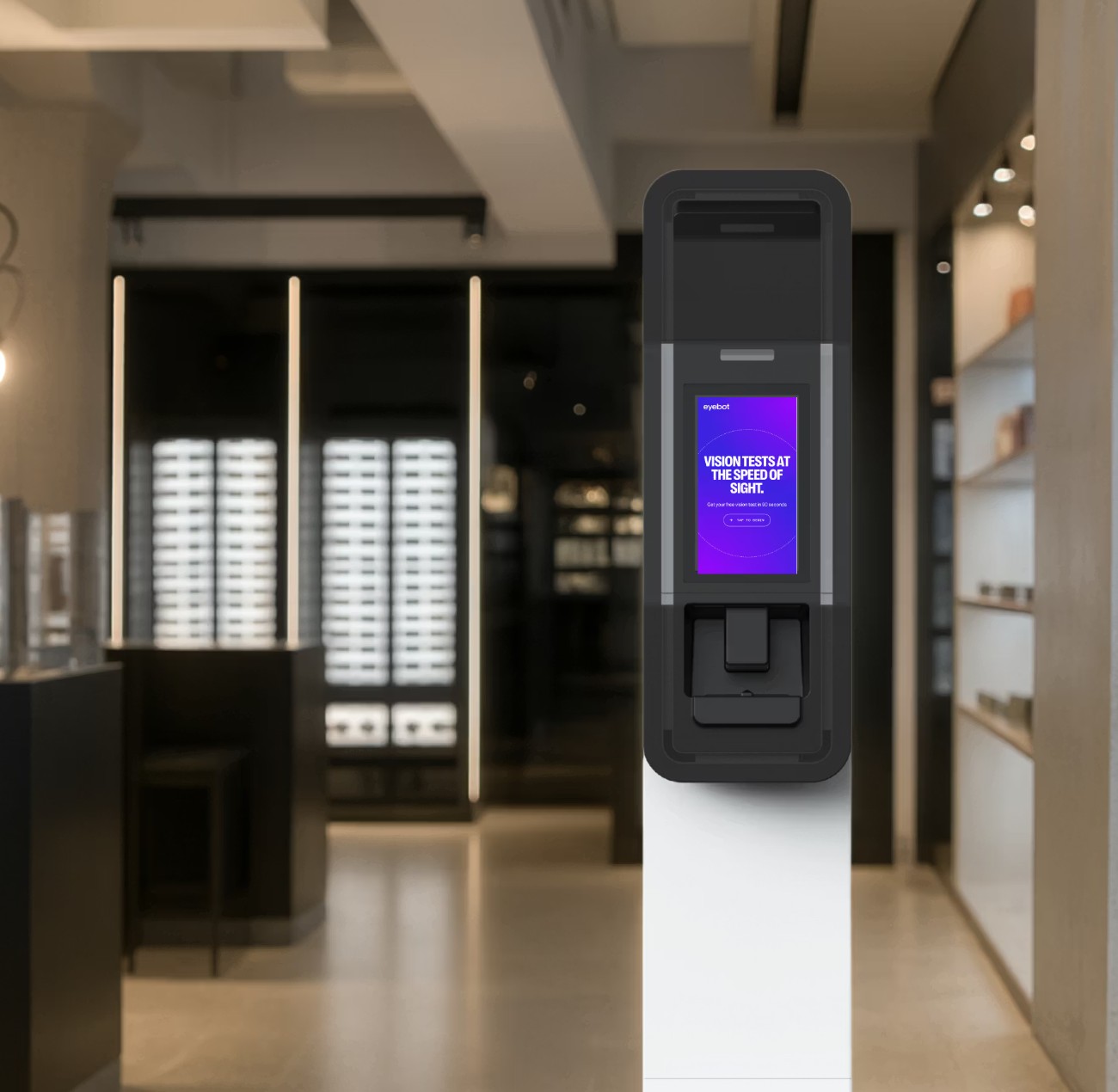
On Monday, Jan. 19, 2026, the Pennsylvania Optometric Association (POA) issued a patient safety alert concerning Eyebot, which has installed automated vision-testing kiosks at 16 Walmart and Sam’s Club locations across the state. Though the retailer considers such kiosks a “pilot program” for expanding access, the POA and American Optometric Association (AOA) both warn an autonomous, 15-minute vision test is no substitute for comprehensive eye health and vision care provided by an eye care provider.
“The POA strongly supports innovation that improves access to eye care and embraces new technology when it enhances patient outcomes,” says POA President Erin Draper, OD “However, we oppose the introduction of kiosk refractions because they do not provide a comprehensive eye exam and may give end-users a false sense of reassurance regarding their ocular health.”
According to a POA press release, deferring routine care increases the risk of delayed diagnosis for conditions that might lead to vision loss or other serious health complications. Dr. Draper adds: “Rather than improving access to eye care, this type of care model is likely to further widen healthcare disparities.”
The POA patient safety alert notes that Eyebot placements elsewhere have already resulted in detailed complaints with state regulatory officials, the Federal Trade Commission (FTC) and Food and Drug Administration (FDA), gathered and reported not only by the AOA but also other health advocacy groups.
Every Pennsylvanian deserves the recognized standard of care, an in-person eye examination with their eye care provider—and there is no substitute for that care, says the POA. Dr. Draper strongly condemns that “any corporation advising otherwise can and should be publicly fact-checked and, when necessary, investigated by the authorities.”
With health misinformation on the rise and patients facing potential new risks, the patient safety alert says, the POA and its doctors are prepared to answer questions about essential eye health and vision care services, patient access and the limits of products and services that are intended to stand apart from or work to undermine doctor-led and coordinated health care delivery. The alert urges patients to consult with their local POA doctor of optometry to get accurate information regarding Eyebot. The company’s announcement of its Pennsylvania pilot program elicited a direct response from many within the optometric community.
AOA ADVOCACY
The POA’s advocacy comes as the AOA continues to raise concerns about Eyebot kiosks, a technology that began emerging in New England in 2024. The kiosks promise 90-second “vision tests” and doctor-reviewed eyeglass prescriptions through a partnership with Zenni Optical. These are free with the purchase of a pair of glasses priced at $49 or more.
In a joint letter to the FTC and FDA, then-AOA President Steven T. Reed, OD, and president of the Massachusetts Society of Optometrists David Metsch, OD, encouraged further assessment to safeguard patient health and privacy, as well as the relationship between Eyebot and Zenni Optical.
“We believe that the technology needs to be assessed to ensure compliance with federal rules and immediate attention is warranted to address misinformation regarding the capabilities and accuracy of this product,” the letter states.
In addition, AOA raised concerns with a potential violation of PART 456—OPHTHALMIC PRACTICE RULES (EYEGLASS RULE) section 456.2, separation of examination and dispensing. The regulations indicate it is an unfair act or practice for an ophthalmologist or optometrist to fail to provide to the patient one copy of the patient’s prescription immediately after the refractive eye examination is completed and before offering to sell the patient ophthalmic goods, whether or not the prescription is requested by the patient.
“Eyebot and Zenni’s offering to patients inherently ties the purchase of prescription eyewear to the release of the prescription, and those who choose not to purchase from Zenni are forced to pay for the prescription and vision test if they choose not to purchase from Zenni,” says the AOA Safety Alert from November 2025.
In 2025, the AOA revised its Policy Statement on Telemedicine in Optometry to specifically refer to technology such as Eyebot. Direct-to-patient technology should not be used as a replacement for a comprehensive eye exam or for diagnostic eye, health or vision conditions.
The AOA says it is monitoring the situation and will continue to advocate for the highest standard of care.