

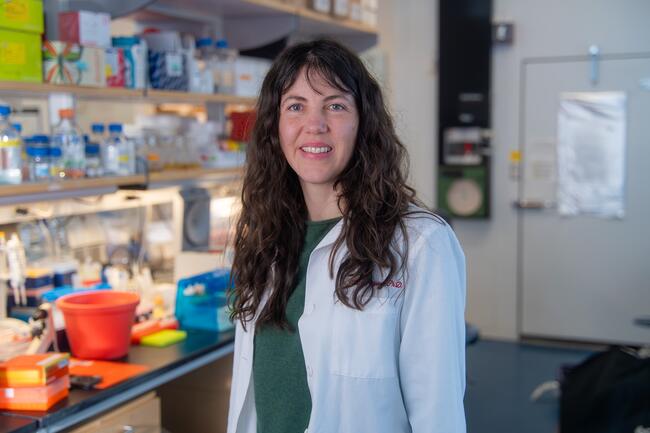
Jillian Pearring, PhD, became fascinated with the eye during undergraduate work in a vision science laboratory. Drawn to neuroscience and cellular biology, she realized the retina links individual cell behavior to perception: photoreceptors detect light and relay signals to the brain.
That early experience launched a career focused on the specialized structure of photoreceptors, which have distinct compartments for light sensing, energy production, gene regulation and communication. “When any one of those systems is disrupted, it affects how the cell functions and survives,” she says. Dr. Pearring’s research is funded by the Foundation Fighting Blindness.
She is an assistant professor at the University of Michigan Kellogg Eye Center and head of the Pearring Lab, where she studies how diverse genetic mutations disrupt photoreceptor biology. While retinitis pigmentosa is the diagnosis, the cellular mechanisms driving degeneration often differ. Her team groups mutations by their effects on photoreceptor compartments, an approach she calls pathobiology. They work to understand how healthy systems work and fail to guide corrective strategies. “The best way to learn how to fix something is to know how it works,” she says.

The Pearring Lab combines advanced imaging and high-powered microscopy to examine retinal tissue at subcellular resolution, revealing how mutations alter photoreceptor structure and function. Because photoreceptors cannot survive outside the eye, the lab uses mouse models that preserve retinal context, enabling more realistic studies. Working inside an ophthalmology department, Dr. Pearring has regular contact with clinician-scientists, which keeps her work focused on translation and patient-relevant outcomes.
FOUNDATION FIGHTING BLINDNESS SUPPORT
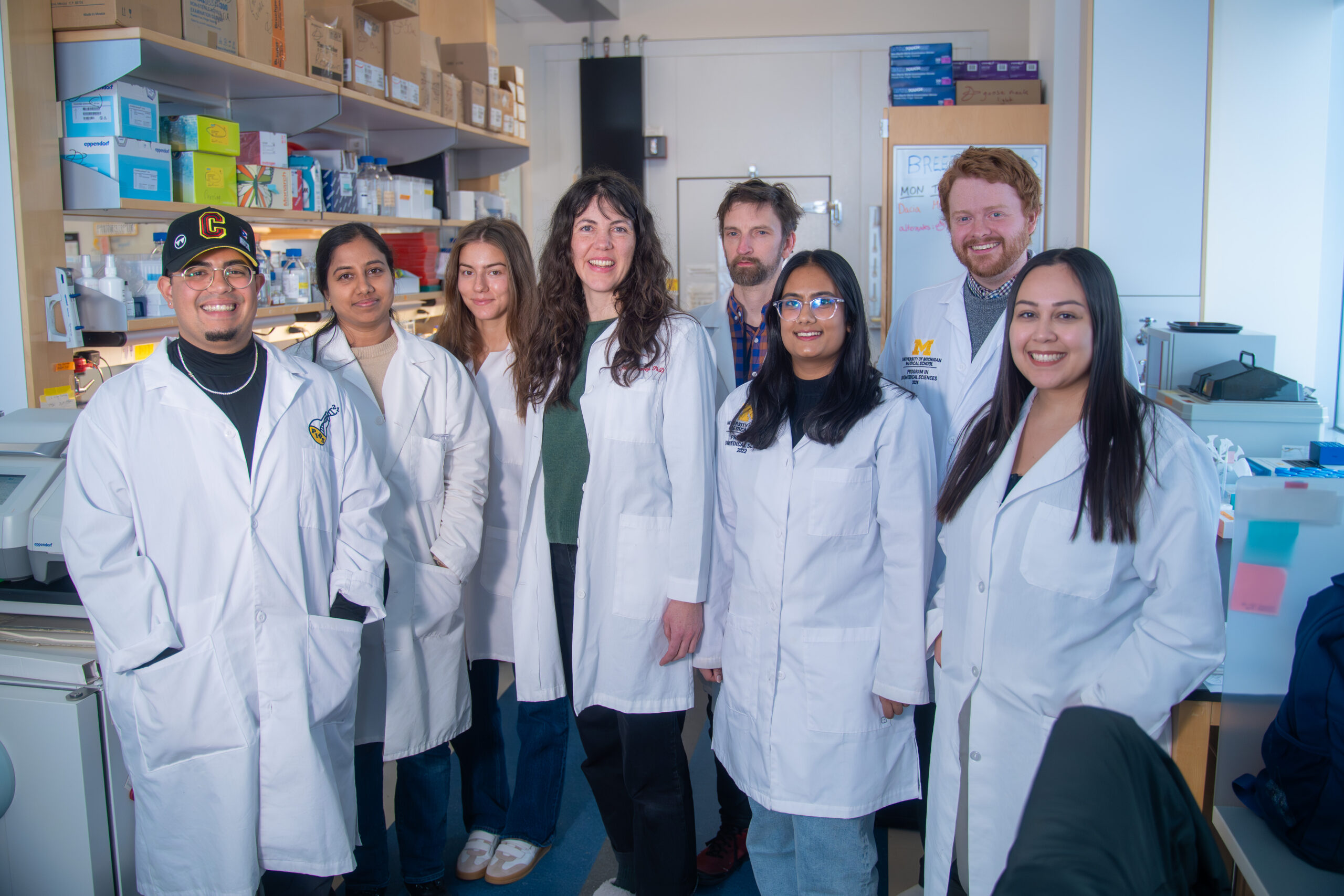 Support from the Foundation Fighting Blindness marked a pivotal moment in her career. Beyond funding, the Foundation connects her to an international network of investigators, fostering collaborations, idea sharing and rapid progress toward treatments. “As a discovery scientist, it feels amazing to have other people see how my work can help patients,” she says.
Mentorship is also central to Dr. Pearring’s mission. Running a lab resembles managing a small business: training students and postdocs in experimental skills, critical thinking and independence. Though many of her own mentors have been men, she values being a visible leader for women entering the field. “Seeing women leading labs, asking big questions, and driving discovery matters,” she says.
She also embraces the accelerating pace of technological advances—modern imaging, molecular biology and genetics now allow scientists to probe processes from single molecules to whole tissues, speeding therapeutic development.
“Advancing treatments and cures for inherited retinal diseases requires strong mentorship and sustained investment in scientific leaders,” says Amy Laster, PhD, Chief Scientific Officer at Foundation Fighting Blindness. “By funding scientists like Dr. Jillian Pearring, we’re not only advancing research—we’re empowering leaders who are training the next generation of vision scientists. When young women see leaders in the lab and the clinic driving discovery, it expands what feels possible in eye care and research. That momentum is what moves the field closer to treatments and cures.”
This article is excerpted from Foundation Fighting Blindness. Read the full story here.