


When Lena Walker, OD, looked at the next chapter of her career, she saw a choice that many optometrists face in one form or another: keep building or step back and do something different.
For Dr. Walker, the decision became clearer as she approached a stage of life where the practice she had built could move forward without her. Dr. Walker became the third independent OD owner of Family Vision of Oregon. She had spent years helping steward a legacy that began in the late 1950s and eventually grew into a network of small-town practices serving communities she knew well.
“I was at the age where I had everything I could possibly need in life,” Dr. Walker says. “I wasn’t tremendously rich, but I have a great place to live and a great life here in Portland.”
That sense of having enough—and of wanting her work to mean more than ownership for ownership’s sake—helped shape her decision. She and her former partner had already built a practice culture rooted in community, and Dr. Walker says she wanted to protect that as the transition unfolded. When two associate doctors, a married couple, showed interest in ownership, Dr. Walker encouraged them to buy the whole practice. Guidance from ACQUIOS Advisors made the buyout process smooth and deliberate.
“I chose to hire them to bring together the interest and tenacity of Tom Chewerda, OD, and Sarah Chewerda, OD, and the expertise of ACQUIOS to get to the finish line.”
DECLINED PE OPTION

Dr. Walker had also seen what could happen when private equity entered the picture. Like many doctors, she received offers—and the financial numbers were tempting. But the more she thought about what could change, the less it felt like the right fit.
What mattered most to Dr. Walker was preserving a model that had always centered patients, staff and the broader community. The practice gave employees flexibility to attend their children’s school events or help aging parents. It donated time and resources. It served small towns where patients often became generations deep. She didn’t feel confident that those touchpoints would remain as strong outside of an independently owned practice.
“These are the kinds of places where you know everybody,” Dr. Walker says. “I saw three, sometimes four generations of family members.”
NEW OPPORTUNITIES
That long view mattered to her. She did not see selling her practice as an exit from optometry so much as an opening to another expression of the same values that had guided her career from the beginning.
Dr. Walker says she has always been drawn to community outreach, volunteering with the Lions, serving on a community public health board for more than a decade and working with an organization that ultimately became her new professional home. The pull toward service, she says, is tied to why she went into healthcare in the first place.
“It wasn’t to make a billion dollars,” she says. “I always thought, what is my life’s legacy going to be?”
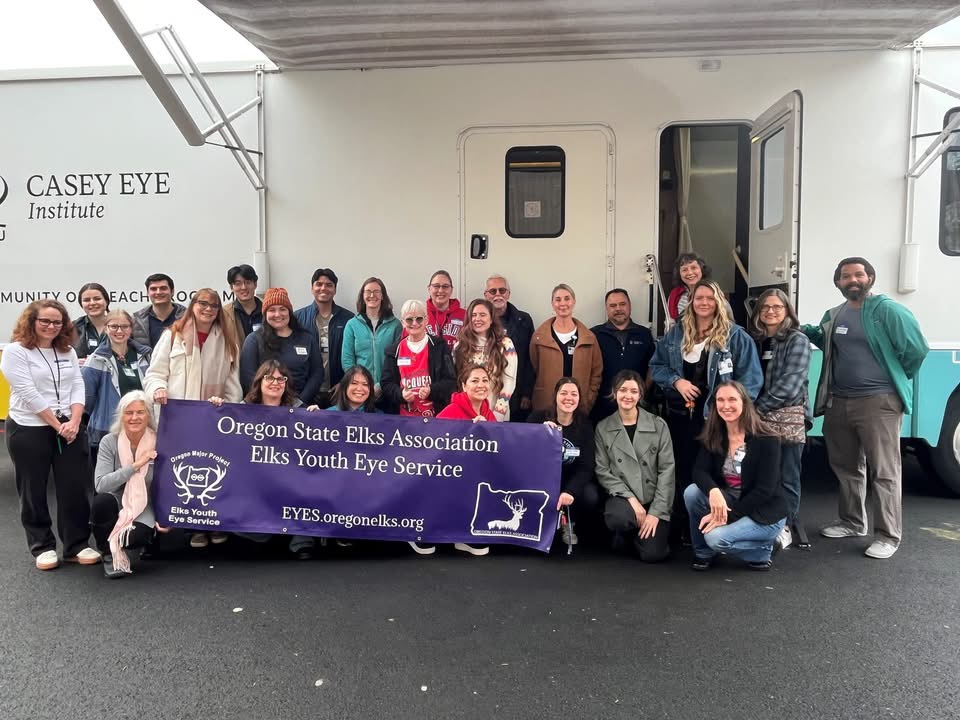
That question is now being answered in a different setting. After selling her practices, Dr. Walker joined Oregon Health and Science University’s Casey Eye Institute to help staff a pediatric mobile unit. The work is focused on rural Oregon, including high-needs communities near Warm Springs Reservation and the north coast near Seaside. The program provides comprehensive cycloplegic dilated exams for children, with glasses supplied for free and unlimited replacements.
COMMUNITY BUILDING
Dr. Walker describes the work as both practical and expansive. The mobile unit is not simply a clinic on wheels, she says, but a system of community-building, education and connection. It works with school screenings, local eye doctors, community health leaders, public health workers and even teachers and bus drivers through “vision health navigator” trainings.
“We’re engaged with the local eye doctors who have been amazing and willing to jump in to help,” she says. “And then we teach community vision health navigator trainings. We make it engaging.”
That model also reflects Walker’s clinical priorities. She says too many school-based vision programs miss hyperopic children, especially those who can overaccommodate and therefore pass basic screenings without a cycloplegic exam.
“I feel like with all the science we have behind us and all the knowledge we have about children’s vision that we ought not to leave out the kids who are hyperopic,” she says. “Hyperopic kids are most likely to have symptoms at school like eyestrain and difficulty focusing on reading material or computers.“

NEED AND PASSION MEET
The need, she adds, is substantial. In the communities her team plans to serve year after year, she says 25% to 30% of children are failing vision screenings. Barriers to follow-up can include transportation, Medicaid access, parents’ work schedules or simply a lack of local providers who can take the children.
Dr. Walker says her background in private practice helps her bridge those gaps because she can talk directly with other doctors and ask practical questions about office hours, transportation access, language skills and comfort with pediatric care.
The work is deeply aligned with the kind of life Dr. Walker says she wanted to build. She has downsized her home and embraced a lifestyle that prioritizes her passions and made room for service in exchange for the pressures of business ownership.
“I created a life that’s pretty peaceful,” she says. “Having a simple life and less to take care of at home allows me to do more for my community.”
And for Dr. Walker, that is the point.
“I’m really happy about that,” she says. “When I take my last breath, I’ll be happy with my life.”


